Resources for modern genetic and molecular labs.
Explore guides and educational resources for laboratories building better LIMS workflows, PGx reporting systems, provider portals, patient access, integrations, billing visibility, and AI-powered operations.
Six areas that map to how a lab runs.
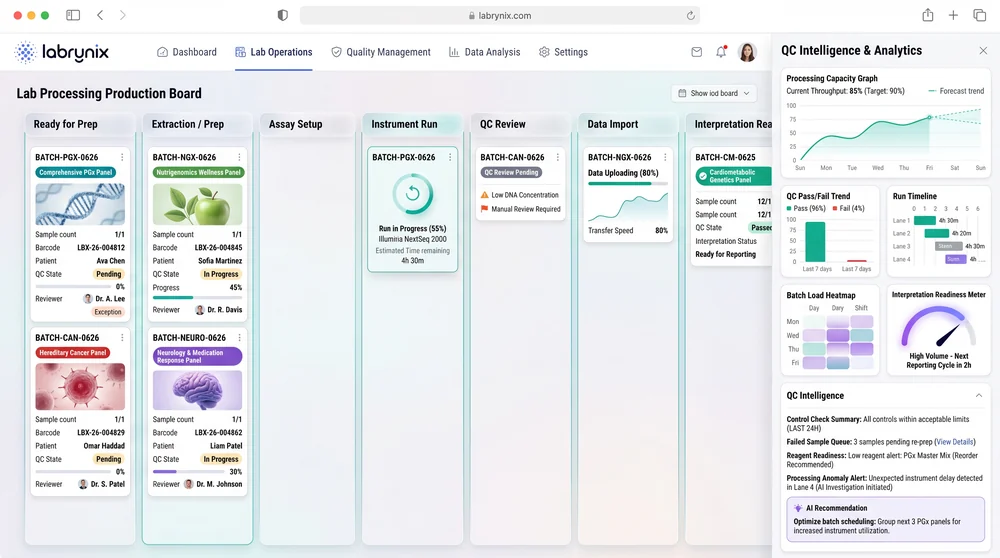
LIMS Workflows
Guides on order intake, accessioning, sample tracking, workflow queues, review processes, and sample-to-report operations.
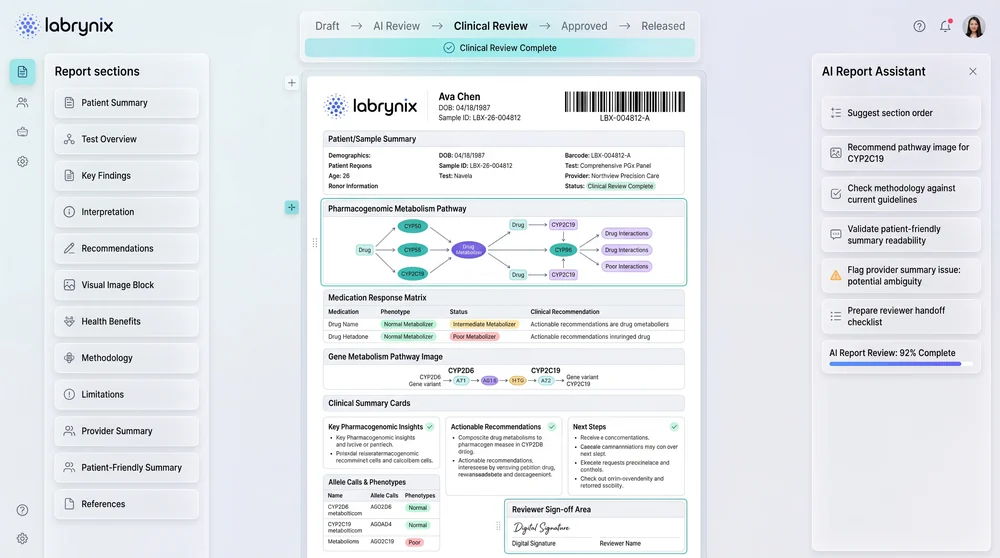
PGx Reporting
Report structure, FDA labeling references, CPIC support, PharmGKB-informed annotations, branded reports, and provider usability.
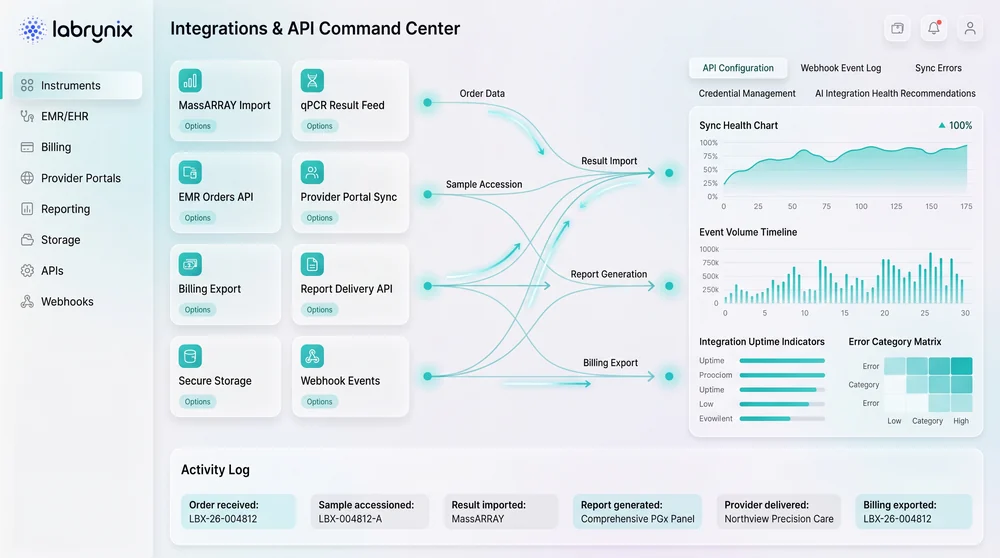
Lab Integrations
HL7, FHIR, APIs, webhooks, EMR, EHR, billing, CRM, and laboratory system integrations.
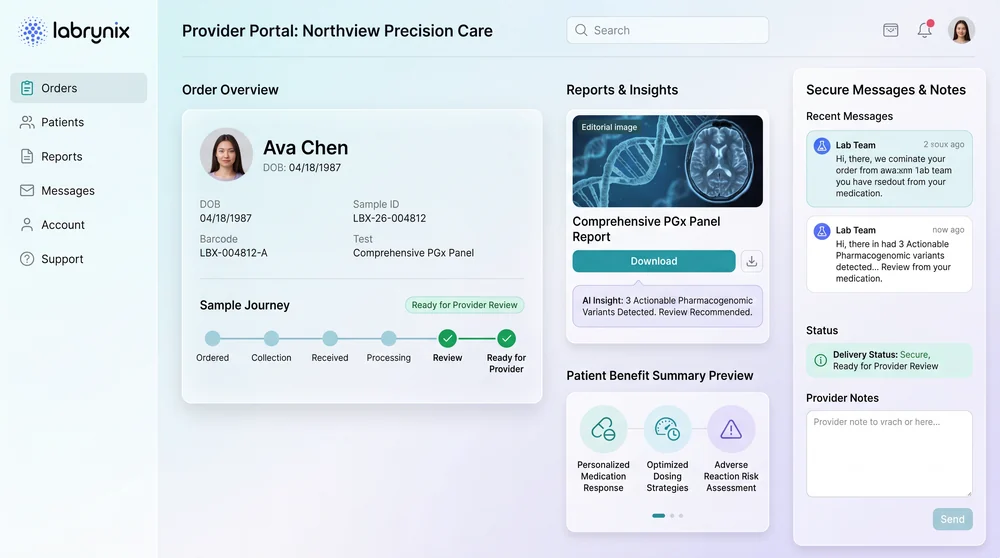
Provider & Patient Portals
Branded provider ordering, report access, patient delivery, communication, and secure access workflows.
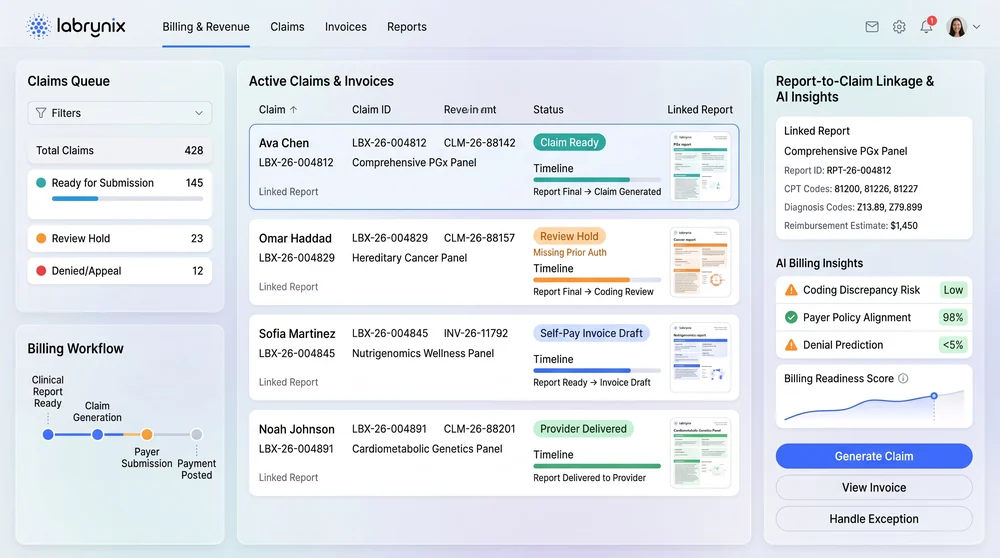
Billing Visibility
Billing workflow tracking, claim stage visibility, invoice workflows, and revenue handoffs.
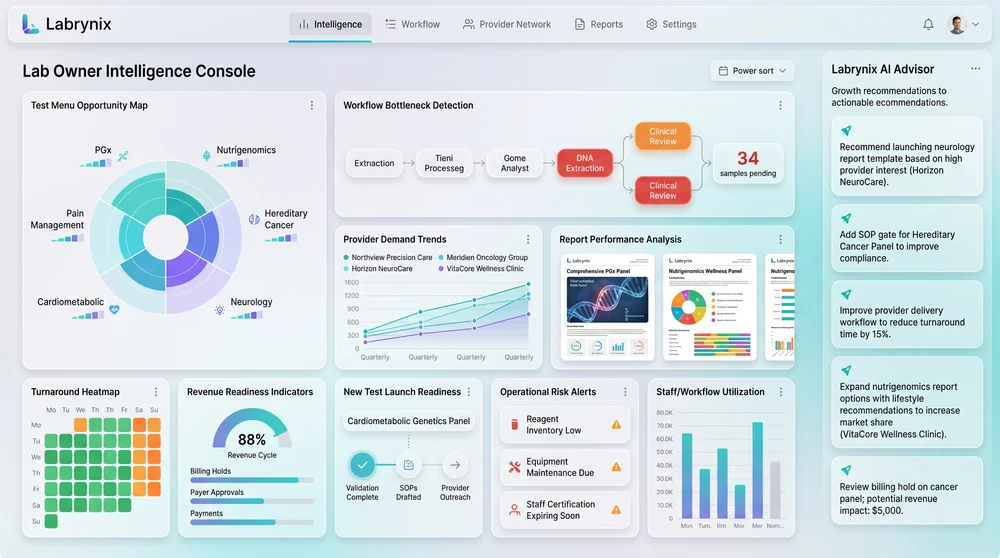
AI & Workflow Automation
AI-assisted reporting, workflow automation, operational insights, bottleneck detection, and responsible AI use.
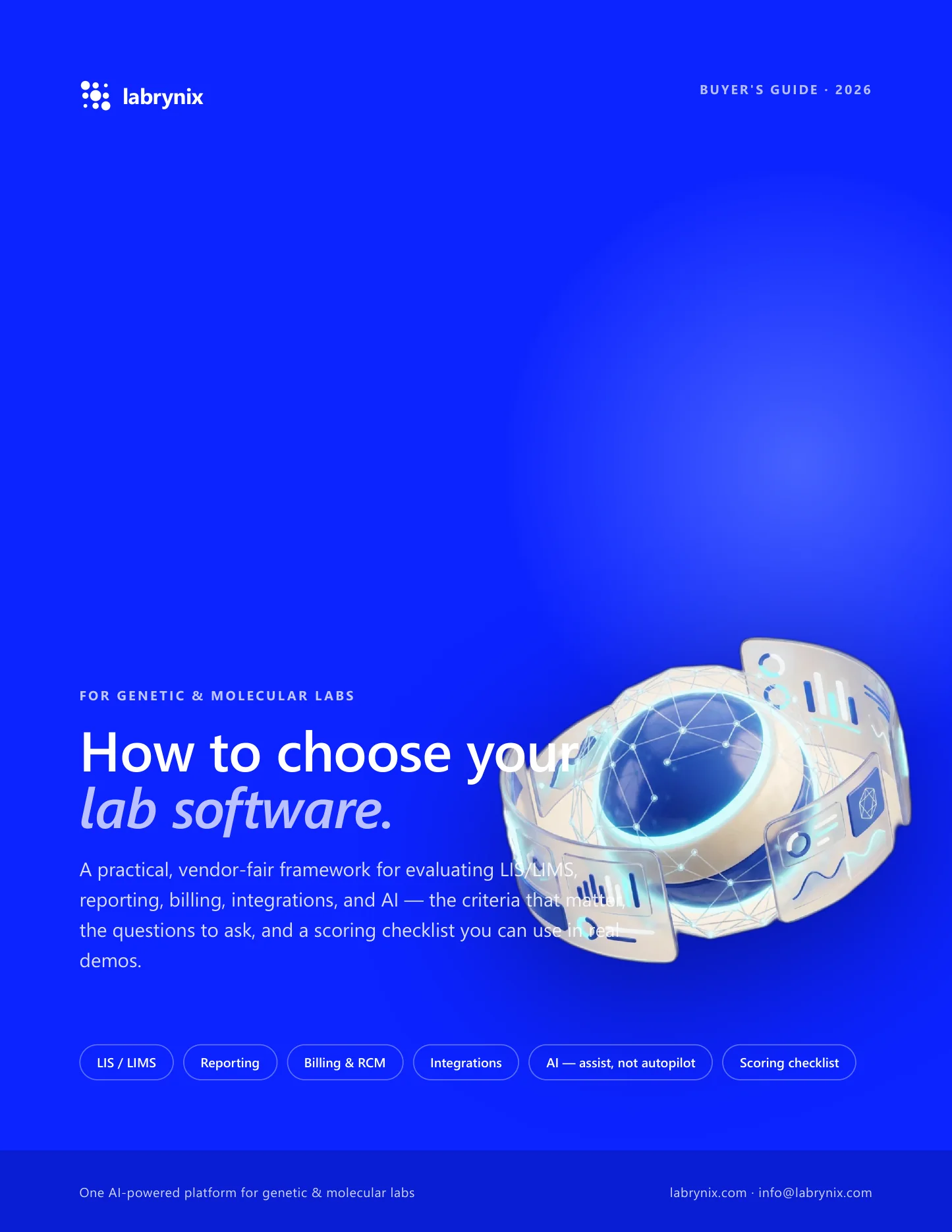
The genetic & molecular lab software buyer's guide.
A practical, vendor-fair framework for evaluating LIS/LIMS, reporting, billing, integrations, and AI — the eight decision criteria, the questions to ask every vendor, a market-context view of where revenue leaks, and a scoring checklist you can use live in demos.
Grounded in trusted PGx sources.
Our resources and reporting workflows reference established pharmacogenomic knowledge — applied through each lab's own interpretation rules and qualified review.
Workflows that can reference FDA pharmacogenomic labeling information where appropriate, applied through your lab's own interpretation and review.
Reporting content informed by CPIC gene-drug guideline recommendations for clinical pharmacogenomics.
Annotation support drawn from PharmGKB gene-drug and clinical annotations and drug-label resources.
A starting library for lab teams.
LIS vs LIMS: What's the Difference (and Why Genetic Labs Need Both)
LIS & LIMSWhat Is Pharmacogenomics (PGx) Testing? A Lab's Guide
PharmacogenomicsBest Pharmacogenomics (PGx) Reporting Software in 2026
Buyer's GuideBest Genetic Testing Lab Software in 2026: How to Choose
Buyer's GuideWhat Is Molecular Diagnostics? Tests, Workflows & Software
Molecular DiagnosticsHL7 vs FHIR for Laboratories: A Plain-English Guide
InteroperabilityLaboratory Revenue Cycle Management (RCM), Explained
Billing & RCMLIS With Built-In Billing: Why One Platform Beats Two
Buyer's GuideWhat Is a Genetic Testing LIS? A Lab's Guide
LIS & LIMSNGS Workflow End-to-End: From Sample to Variant Report
GenomicsBest Molecular Diagnostics LIMS in 2026: How to Choose
Buyer's GuideLigoLab Alternatives for Genetic & Molecular Labs
ComparisonAI Agents for Genetic Labs: SOPs, Workflows & Algorithms
AI in the LabHow to Build a Custom Neurology Genetic Testing Report
ReportingHereditary Cancer Genetic Testing Software & Reporting
ReportingAI-Assisted PGx Report Drafting: Faster Sign-Out
AI in the LabMolDX/DEX Z-Codes Explained: Why Molecular Claims Get Denied
Billing & RCMCPIC Guidelines and CPIC-Concordant PGx Reporting: A Lab Director's Guide
PharmacogenomicsThe FDA LDT Rule Was Vacated: What Labs Need to Know in 2026
RegulatoryWhite-Label PGx Reporting: Add a Pharmacogenomics Line Without Replacing Your LIS
PharmacogenomicsLIS/LIMS Implementation Timeline: A Realistic Checklist for Genetic and Molecular Labs
Buyer's GuideHow to Reduce Molecular Lab Claim Denials: A Practical Playbook
Billing & RCMWhat Is a CLIA Lab? Certificate Types, CAP, and Compliance Software
CompliancePut these ideas to work in your lab.
LIMS · PGx reporting · Integrations · Portals · Billing visibility · AI insights